
The Science of Baby Sleep: What Parents Didn’t Learn in the First Month
The first month with a newborn can feel like a blur of feedings, diapers, and endless night wakings. Many parents enter this stage with big expectations—“Will my baby sleep through the night?” or “How do I fix this?”—only to discover that newborn sleep doesn’t follow any rulebook.
Understanding the science behind baby sleep can help parents navigate those early weeks with more confidence, patience, and realistic expectations. From short sleep cycles to developing circadian rhythms and awake windows, the first month is all about adjustment—for both baby and parent.

Short Sleep Cycles and Awake Windows
Newborns have much shorter sleep cycles than adults, averaging 50–60 minutes compared to 90–120 minutes in adults. Each cycle moves through light and deep sleep, making babies more prone to waking frequently.
Another key factor is awake time. In the first month, babies can usually stay alert and engaged for only 45–60 minutes before becoming overtired. Encouraging awake periods after feeds with gentle snuggles, tummy time, or soft interactions helps babies gradually adjust to a rhythm.
Understanding the 0–4 Week Schedule
In the first month, parents can use a flexible 3-hour cycle (Eat, Play, Sleep) as a foundation. Here’s a sample daytime routine for babies 0–4 weeks old:
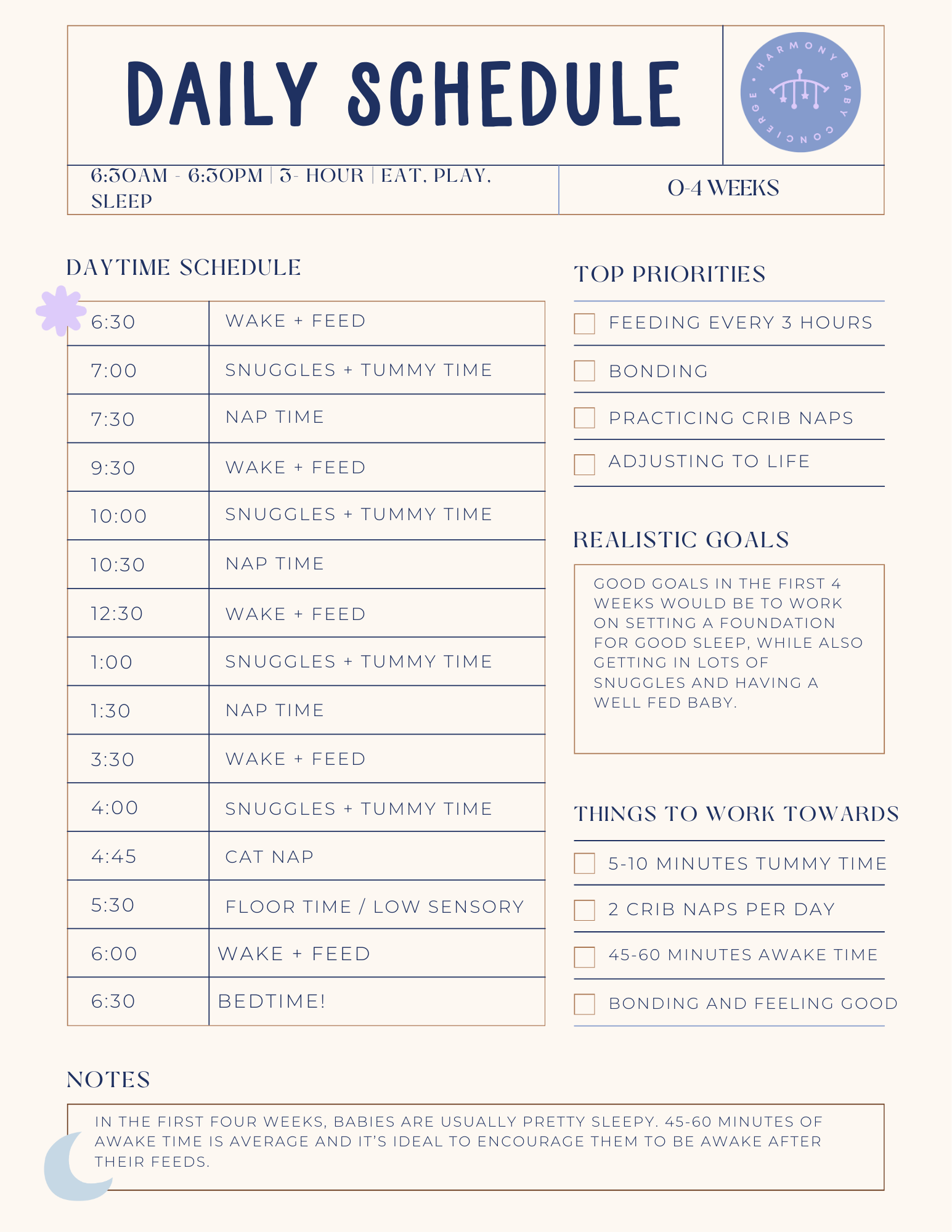
This schedule isn’t rigid—babies’ needs vary—but it provides a framework that encourages feeding every 3 hours, bonding, practicing crib naps, and adjusting to life with a newborn.
Realistic Goals for the First Month
In the first four weeks, babies are usually very sleepy, so parents shouldn’t expect long stretches of independent sleep. Good goals for this early stage include:
Working on foundations for good sleep while keeping the baby well-fed
Encouraging 45–60 minutes of awake time after feeds
Completing 2 crib naps per day
Practicing 5–10 minutes of tummy time
Prioritizing bonding and feeling good
Remember, the first month is about building a rhythm that works for both baby and parent. Some days will feel smoother than others, and that’s completely normal.
Circadian Rhythms Are Still Developing
A newborn’s internal clock, or circadian rhythm, isn’t fully formed at birth. This means babies don’t yet distinguish between day and night, which explains why they might sleep more during the day and wake frequently at night.
Exposing babies to natural light during the day, keeping nighttime interactions calm and dimly lit, and following gentle feeding routines can help their body clocks start to adjust.
How Parents Can Support Healthy Sleep
Parents can make the first month more manageable by:
💤Observing sleepy cues and responding promptly
💤Using a consistent sleep environment with dim lights and minimal noise
💤Encouraging gentle play during awake windows after feeds
💤Resting whenever possible and accepting help when needed
Understanding the science of sleep—including awake times, short sleep cycles, and the importance of bonding—helps parents feel more in control and less anxious during those long nights.
How Harmony Baby Concierge Can Help
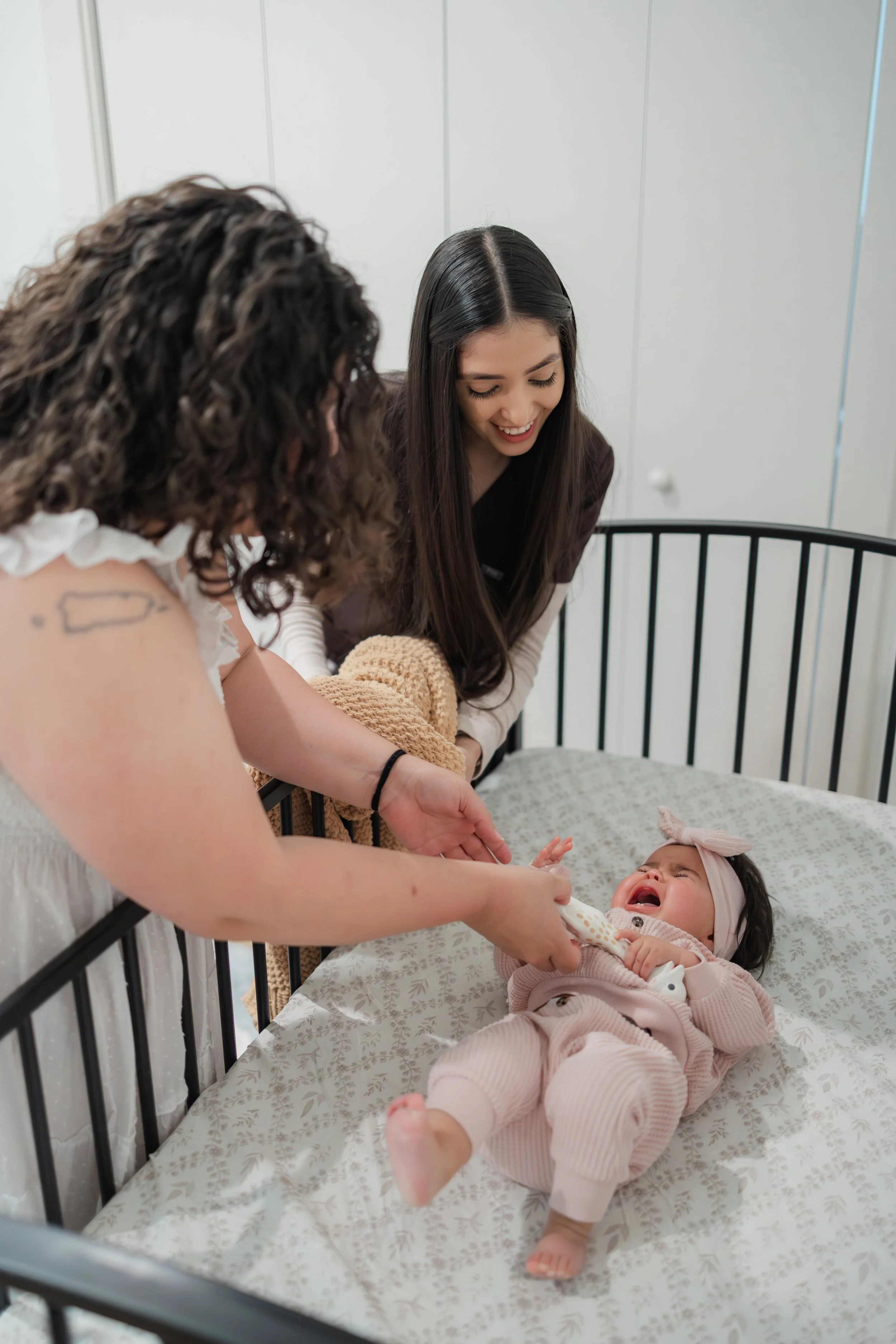
Navigating newborn sleep is easier with professional support. Newborn care specialists, night nurses, and postpartum doulas provide guidance, hands-on care, and reassurance—helping families establish gentle routines, maintain healthy awake windows, and set realistic expectations. With expert care, parents can rest, recover, and enjoy the early weeks while feeling confident in their baby’s care.
Harmony Baby Concierge is a full service Newborn Care + Postpartum Support Agency based in Dallas, Austin and Houston, Texas. We have a well-rounded team of Newborn Care Specialists, Night Nurses, Postpartum Doulas, Newborn Night Nannies and Baby Nurses. We provide lactation support, newborn care, night nursing, gentle sleep training and parent education to families of newborns. We serve all families with love, warmth and care. Serving: Dallas, Austin, Houston, Highland Park, University Park, Kessler Park, Lake Highlands, Lakewood, Plano, Frisco, Celina, Prosper, Fort Worth, Southlake, Westlake, Irving, Preston Hollow, Park Cities, Grand Prairie, Carrollton, Houston, Manvel, Galveston, West University, Austin, Barton Creek, Round Rock, Houston, Denver, New York City, Greenwich CT, Manhattan, Brooklyn, Englewood Colorado, Cherry Hills Village CO, and Surrounding Areas.