
Common Newborn Sleep Challenges: How to Solve Them?
Welcoming a newborn into your life is magical but it’s also exhausting. One of the biggest challenges parents face in those first months is sleep. Whether your baby wakes every hour, struggles with long naps, or resists going down at night, you’re not alone. Understanding common sleep challenges and having strategies in place can make a world of difference, for both your baby and you.

At Harmony Baby Concierge, we’ve supported families across Miami, New York City, Chicago, Greenwich, Charlotte, Raleigh, FortWorth, Denver, OklahomaCity, Phoenix, Dallas, Austin, Houston, and SanAntonio, helping parents navigate newborn sleep while still finding time to rest, recover, and enjoy these precious early moments.
Understanding the 0–4 Week Schedule
In the first month, parents can use a flexible 3-hour cycle (Eat, Play, Sleep) as a foundation. Here’s a sample daytime routine for babies 0–4 weeks old:
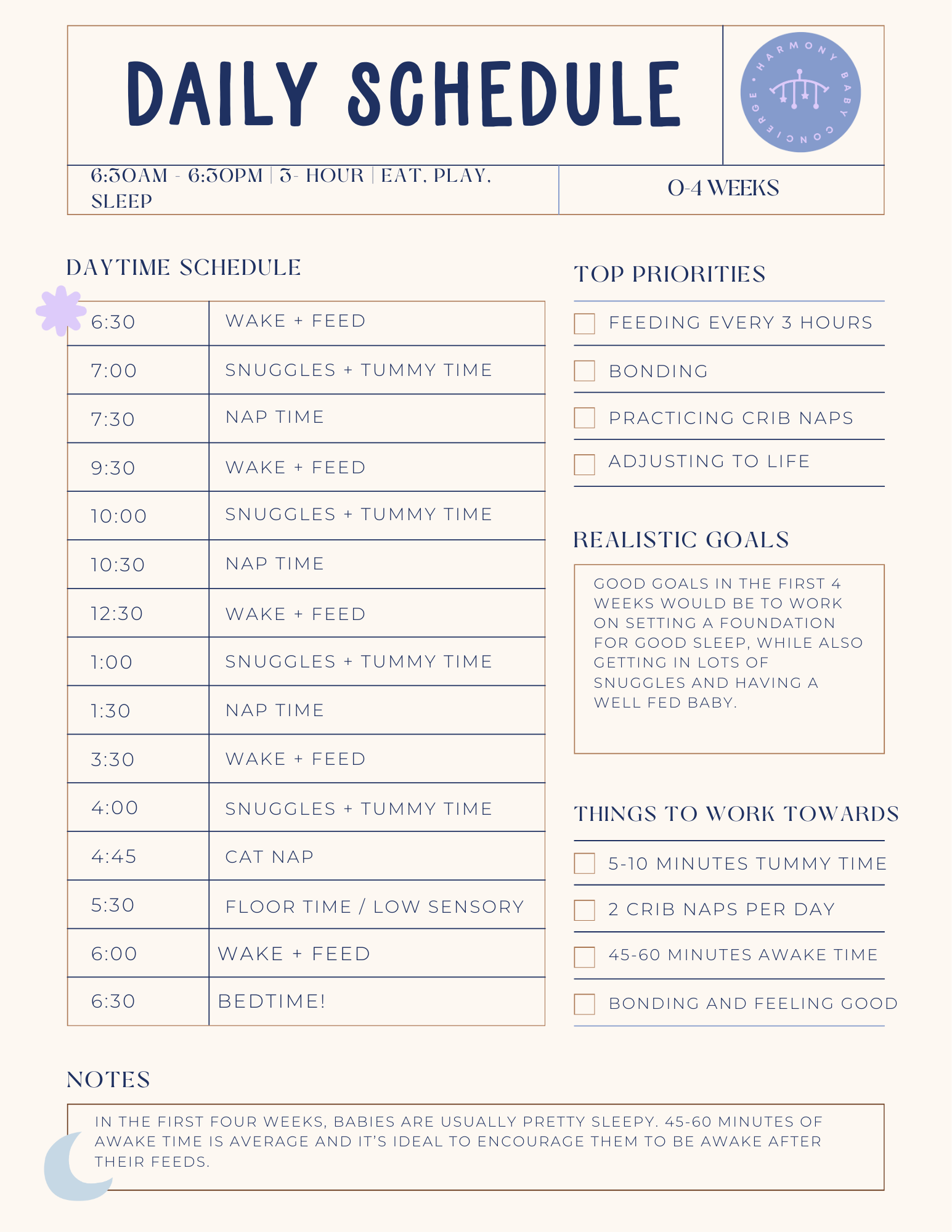
This schedule isn’t rigid. Babies’ needs vary, but it provides a framework that encourages feeding every 3 hours, bonding, practicing crib naps, and adjusting to life with a newborn.
Realistic Goals for the First Month
In the first four weeks, babies are usually very sleepy, so parents shouldn’t expect long stretches of independent sleep. Good goals for this early stage include:
😴Working on foundations for good sleep while keeping the baby well-fed
😴Encouraging 45–60 minutes of awake time after feeds
😴Completing 2 crib naps per day
😴Practicing 5–10 minutes of tummy time
😴Prioritizing bonding and feeling good
Remember, the first month is about building a rhythm that works for both baby and parent. Some days will feel smoother than others, and that’s completely normal.
Frequent Night Wakings
It’s normal for newborns to wake often, sometimes every 2–3 hours for feeding, comfort, or diaper changes.
Why it happens:
Babies have tiny stomachs and need frequent nutrition
Sleep cycles are shorter in the first months
Comfort and reassurance are essential for bonding
How to manage:
Keep nighttime interactions calm: dim lights, soft voices, and gentle touch
Use a swaddle or sleep sack to provide security
Track patterns in a sleep log to anticipate when your baby might wake
✨ Why it’s useful: Helps parents reduce nighttime stress while understanding their baby’s natural rhythms

Short Naps or Irregular Daytime Sleep
Babies may take multiple short naps instead of one long stretch, leaving everyone feeling tired.
Strategies:
Create a consistent nap environment: white noise, darkened room, cozy temperature
Offer tummy time before naps to help them use up energy safely
Watch for sleepy cues and put them down promptly
✨ Why it’s useful: Short naps don’t mean failure—understanding sleep cues prevents overtiredness and supports longer naps
Difficulty Settling Down
Some babies struggle to fall asleep without assistance.
Helpful approaches:
Gentle rocking, patting, or shushing
Establish a simple bedtime routine: bath, feeding, lullaby
Use safe sleep practices and avoid overstimulation before sleep
✨Why it’s useful: Building cues and routines teaches your baby when it’s time to rest, easing the transition into longer sleep stretches

The Role of Environment
Your baby’s surroundings can make a big difference in sleep quality:
Keep rooms cool and dark
Use white noise to mask household sounds
Ensure the crib or bassinet is safe and comfortable
✨Why it’s useful: Small adjustments to the sleep environment often yield big improvements in how well babies—and parents—rest
Parents’ Self-Care is Essential
Caring for a newborn can be exhausting. Sleep challenges aren’t just about the baby, they impact the whole family.
Take turns with your partner or trusted caregiver
Nap when your baby naps
Consider support from a Newborn Care Specialist or Night Nurse to guide routines and provide overnight relief
✨Why it’s useful: When parents are rested and supported, the whole household functions better, and baby sleep improves naturally
How Harmony Baby Concierge Can Support Your Family
Whether you’re in Miami, NYC, Chicago, or other cities we serve, our Newborn Care Specialists, Night Nurses, and Postpartum Doulas are here to help:
Overnight care: Gentle sleep guidance while you rest
Daytime support: Naptime routines, feeding, and development-focused activities
Parent coaching: Tips for safe sleep, soothing techniques, and self-care strategies

With our compassionate support, families can rest, bond, and feel confident even during the most challenging early nights.
Harmony Baby Concierge is a full service Newborn Care + Postpartum Support Agency based in Dallas, Austin and Houston, Texas. We have a well-rounded team of Newborn Care Specialists, Night Nurses, Postpartum Doulas, Newborn Night Nannies and Baby Nurses. We provide lactation support, newborn care, night nursing, gentle sleep training and parent education to families of newborns. We serve all families with love, warmth and care. Serving: Dallas, Austin, Houston, Highland Park, University Park, Kessler Park, Lake Highlands, Lakewood, Plano, Frisco, Celina, Prosper, Fort Worth, Southlake, Westlake, Irving, Preston Hollow, Park Cities, Grand Prairie, Carrollton, Houston, Manvel, Galveston, West University, Austin, Barton Creek, Round Rock, Houston, Denver, New York City, Greenwich CT, Manhattan, Brooklyn, Englewood Colorado, Cherry Hills Village CO, and Surrounding Areas.